

It’s very easy to make a pom pom with a clover pom pom maker. Once finished, you can use the tails to attach it to your project (such as the top of a hat.) A pro tip is to go back inside the hat and attach it a little more firmly with a needle and thread. Check out the following video to learn how to make a pom pom:
How to Knit a Gauge Swatch

I know you don’t want to knit a gauge swatch; no one does. You have new yarn, a pattern you want to knit, and you’re excited to dive right in. So why bother? If you want to be sure your project is going to fit, and don’t want to have to rip it out and start over if it doesn’t fit, then you need to knit a gauge swatch. And I’m going to be direct here – you may need to knit more than one in order to find the right combination of yarn and needles to obtain the correct gauge. One of the main benefits of hand knitting is you can make sure your finished piece turns out like you want, and fits like you want. Starting with a gauge swatch will help you get that result.
There’s a lot to know about gauge – entire classes are taught on this subject. While I don’t claim to be an expert, I hope to share enough information here for an amateur knitter to successfully create projects that fit as you had hoped.
Begin as You Mean to Go On
When knitting your swatch, you need to use the exact yarn and needles you plan to use for the project. If it’s a big project (like a sweater,) you might want to test a couple of yarn/ needle combinations until you find a marriage that feels good for your hands. You should also knit your swatch in the same pattern as your project. For example, if the sweater you’re planing to knit is mainly in garter stitch, you need to make a garter stitch swatch, not stockinette.
Check for Gauge and Drape
In addition to trying to get the correct number of stitches per inch (gauge), you’ll also want to test how the fabric drapes. If you’re making a scarf and the gauge is correct but the fabric feels really stiff and doesn’t flow, you may either want to go up to a bigger needle size or try it with a different yarn; you may also need to adjust the pattern so the project will turn out as you’d like.
Needle Size to Check First
If you’re a beginning knitter, start with the needle size the pattern recommends. Over time (if you swatch regularly) you will come to know if you generally knit tighter or looser. I’m a very loose knitter, so I always have to go down at least one needle size from what the pattern suggests; now I start with one needle smaller for every swatch and sometimes still have to go down another needle size to obtain the correct gauge.
How Big to Make Your Swatch
You will get the best results if you can measure a 4×4” square, ideally measured in the middle of a 6×6” square. I know it sounds like a lot to make a swatch that big and there will come a day when your’e tempted to knit a tiny swatch and measure a 1×1” square in the middle. No judgment, although it will be more accurate if you make a more sizable swatch. I might suggest that the more substantial your project (such as a sweater) the more accurate you want your swatch measurements to be.
How Many Stitches to Cast On?
If the pattern gives you the number of stitches per 4” as the target gauge, take that stitch count times 1.5 and cast on that many stitches. For example, if 4” in the correct gauge is 20 stitches, 20 times 1.5 is 30 stitches. Cast on 30 stitches, which should create a swatch that’s around 6” in diameter.
Measuring Your Swatch
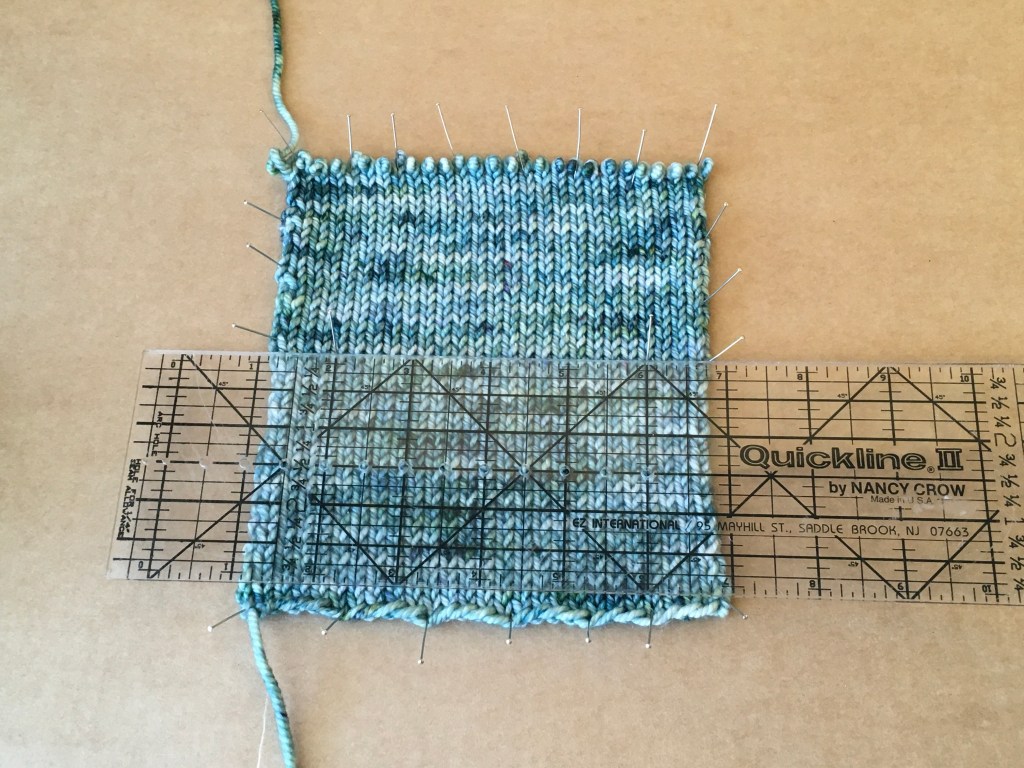
To calculate your gauge, first remove the knitting needles. You can bind off, move the live loops to a piece of scrap yarn, or simply pull out the needles; you shouldn’t measure with the work still on the needles. Lay out your swatch and ideally pin the sides as shown below; you want it to be flat without pulling or stretching it. I often place a piece of cardboard under the swatch, which makes it easy to pin. Always make sure you’re measuring on a flat surface, not with the piece laying on your hand, leg, etc. Place a ruler in the middle of the swatch (the middle from top to bottom and side to side.) Make sure the ruler is lined up on the same row of stitches horizontally all the way across. Place pins 4 inches apart as shown in Figure 1; I try to put the left pin in between stitches to make it easier to count. Then count the number of stitches between the pins. That’s the number of stitches per 4”, which is often how gauge is expressed in a pattern. To get the stitches per inch, divide by 4. In my example in Figure 1, there are 18 stitches in 4”.
Try, Try Again
If you finish your swatch and your gauge isn’t correct, you’ll need to knit another swatch. Sometimes I’ve had to knit 3 or 4 swatches for one project until I’m finally satisfied that the gauge is accurate.
Stitch vs. Row Gauge
Patterns will sometimes include both stitch and row gauge. In my experience, it’s rare to get both to match the pattern. Instead, I make sure my stitch gauge is correct and then I simply add or subtract rows as necessary to make my project the length I want.
Projects Knit in the Round
If your project is knit in the round, your swatch shouldn’t be knit flat. You have three choices for knitting your swatch if your project is knit in the round:
- 12” Circle: The first option is to knit a circle that’s 12” in circumference so when laid flat it’s still 6” across and you can measure a 4×4” square. The benefit of this option is you can rip the swatch back out and refuse the yarn, but the drawback is you’ve knit most of a hat by the time you finish the swatch.
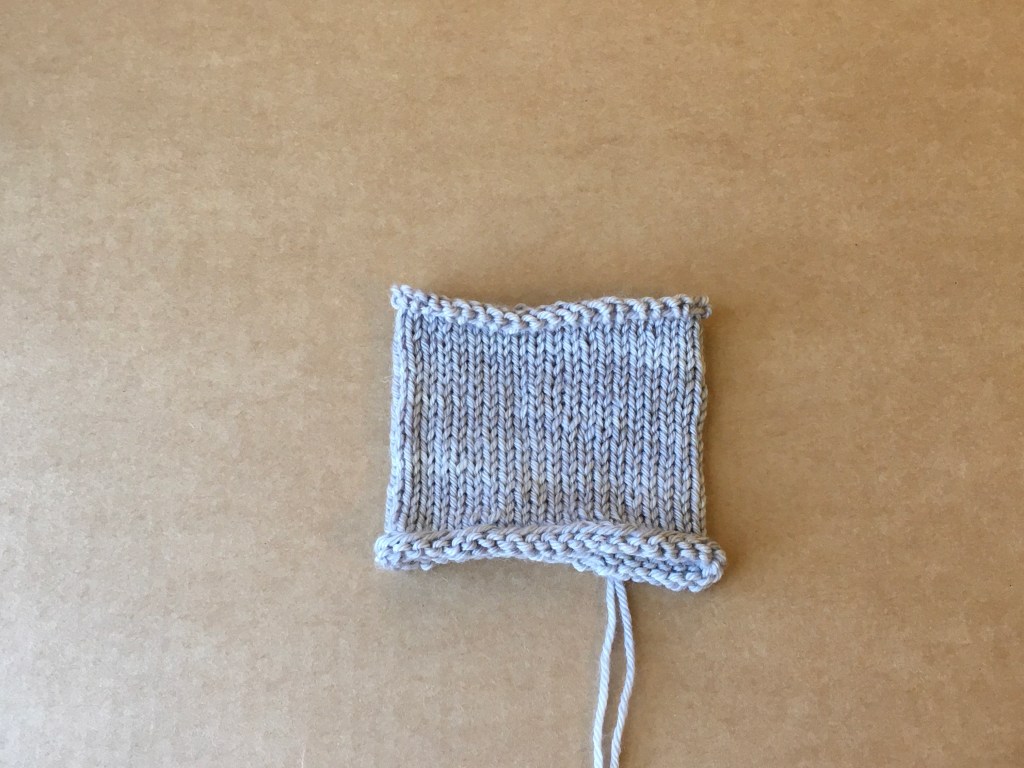
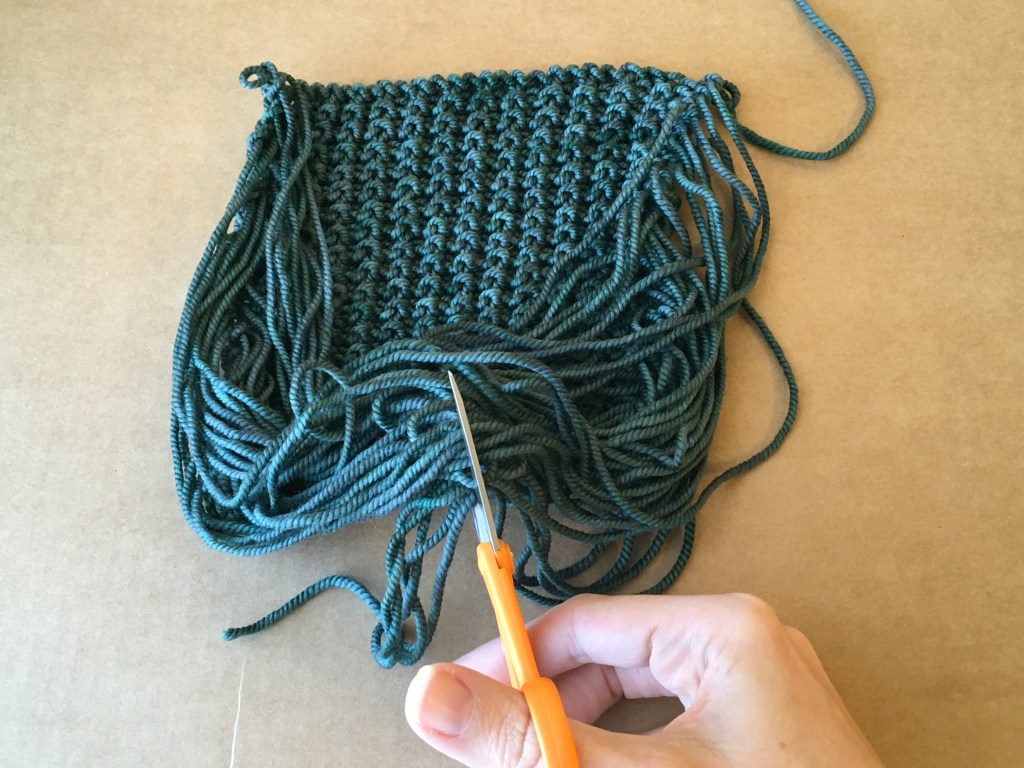
- 6” Circle, Cut to Lay Flat: The second option is to knit a circle that’s 6” in circumference, as in Figure 2 below. When you’re finished, you need to cut it vertically to lay it flat and measure it, as shown in Figure 3. This is a fast option that I think provides the best results but you can’t reuse the yarn.

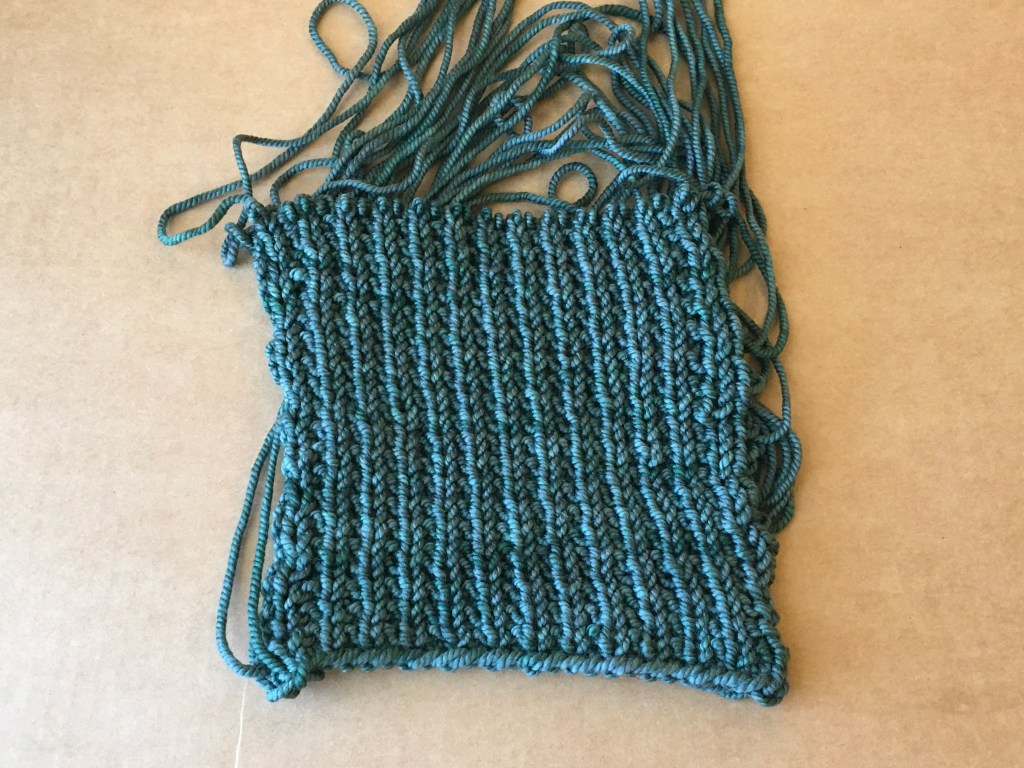
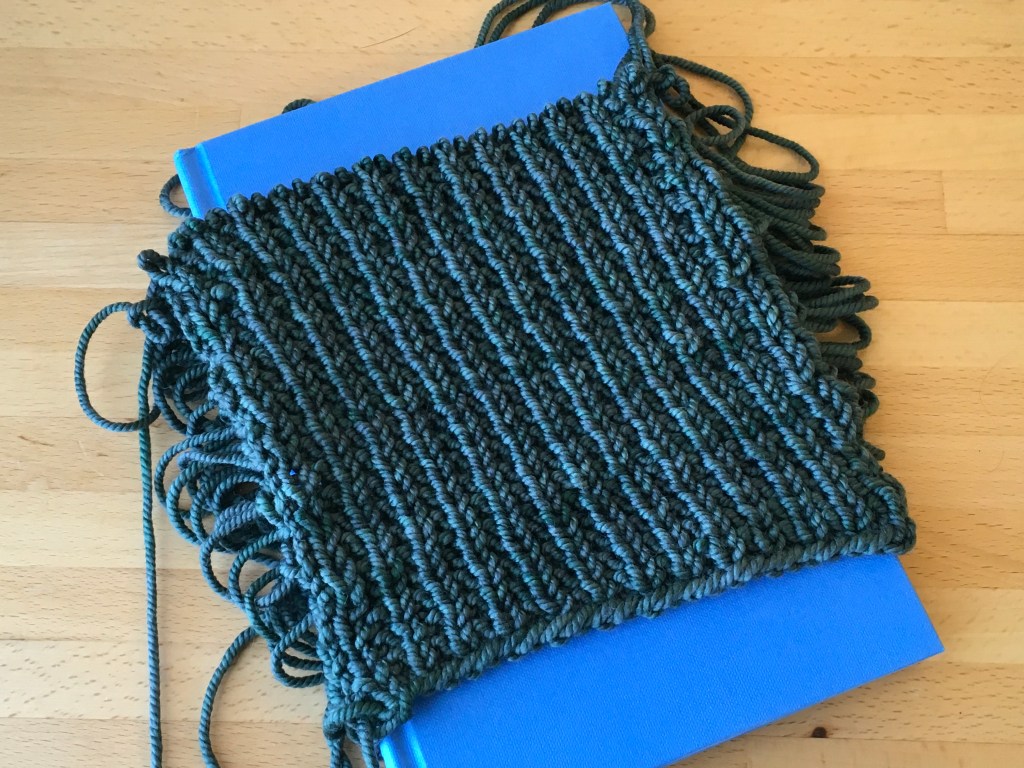
- Flat with Floats: The final option is to knit 6-7” across from right to left as usual, then leave a very long float across the back and start again at the right side of the front of the work. Figure 4 below shows a sample from the front and Figure 5 shows the same sample from the back. You have to make sure your floats are very long so they don’t pull your work. This is a good option that’s both fast and allows you to reuse your yarn, as long as the floats are plenty long that they don’t have to be cut. If the floats are pulling on the stitches at all, you’ll need to cut them to get a good measurement; see Figure 6. If the floats are sufficiently long that they don’t have to be cut, I lay the swatch around a book to be able to measure it flat. See Figures 7 and 8.


A Hat as a Sweater Swatch
If you’re going to knit a big project like a sweater that’s knit in the round, you can knit a hat as a swatch. Hats come together pretty quickly and aren’t much bigger than a swatch anyway. Plus then you don’t waste any yarn.
Swatch Blocking
It’s often advised to block your swatch, especially if you’re going to block your final project. If the yarn is going to stretch during blocking, it will affect the final size of your project, which you want to know before you begin. I admit I’ve had limited success with this method. For example, I’ve blocked swatches for a sweater and the gauge didn’t change much before and after blocking. But when I made the actual sweater, the difference in size before and after blocking was very noticeable. I think part of the issue is the weight of a heavy sweater can stretch out the stitches, but there isn’t much weight to the swatch so it doesn’t have the same effect. A drawback of blocking is you can’t reuse the yarn. If you do block your swatch, remember to measure the gauge both before and after blocking; you’ll need to know both as you’re knitting your project.
Reusing Your Swatch Yarn
My preference is always to try to reuse my swatch yarn. Sometimes I will knit and measure my swatch, then rip it back out and start my project without ever having cut the yarn. Other times, if I think I’ll have plenty of yarn for my project, I’ll cut the yarn and keep the swatch; then if I’m close to running out of yarn at the end, I can frog the swatch if necessary. If I block the swatch, I won’t refuse the yarn.
Try on Garments as You Knit
I also suggest trying on work-in-progress garments as you knit them to make sure they’re fitting as you had hoped. Learn more about how to do that when knitting on circular needles.
I hope that overview helps you knit projects that fit like you want. Happy knitting!
How to Knit Magic Loop with 2 Circular Needles

Magic loop is a term that refers to knitting a project in the round using a circular needle with a cable that’s much longer than the circumference of the project. The way I like to knit magic loop uses two sets of circular needles (four needles, two cables.) You can use this technique anytime you’re knitting in the round, from large projects such as a sweater, medium-sized projects like a hat, or even on tiny projects such as a Christmas ornament. I find this method creates fewer issues with laddering or gaps between stitches than double pointed needles or traditional magic loop.
To knit this method, you will need two sets of circular needles with the same sizes of needles. Ideally they need to be different in some way (such as color or length) so you can tell them apart easily while knitting. However, they do need to be the same type (and I would argue the same brand) because to use two different kinds of needles (such as one pair in metal and the second in wood) would likely create tension issues in your project.
Learn how to knit with this method in the video below:
Want to Give it a Try?
The following patterns would work well with this method of magical loop:

Mini Weasley Sweater Ornaments

Vancouver Fog Fingerless Gloves

Tivoli Slouch Hat

Coco Knits Sweater
How to Wind Yarn
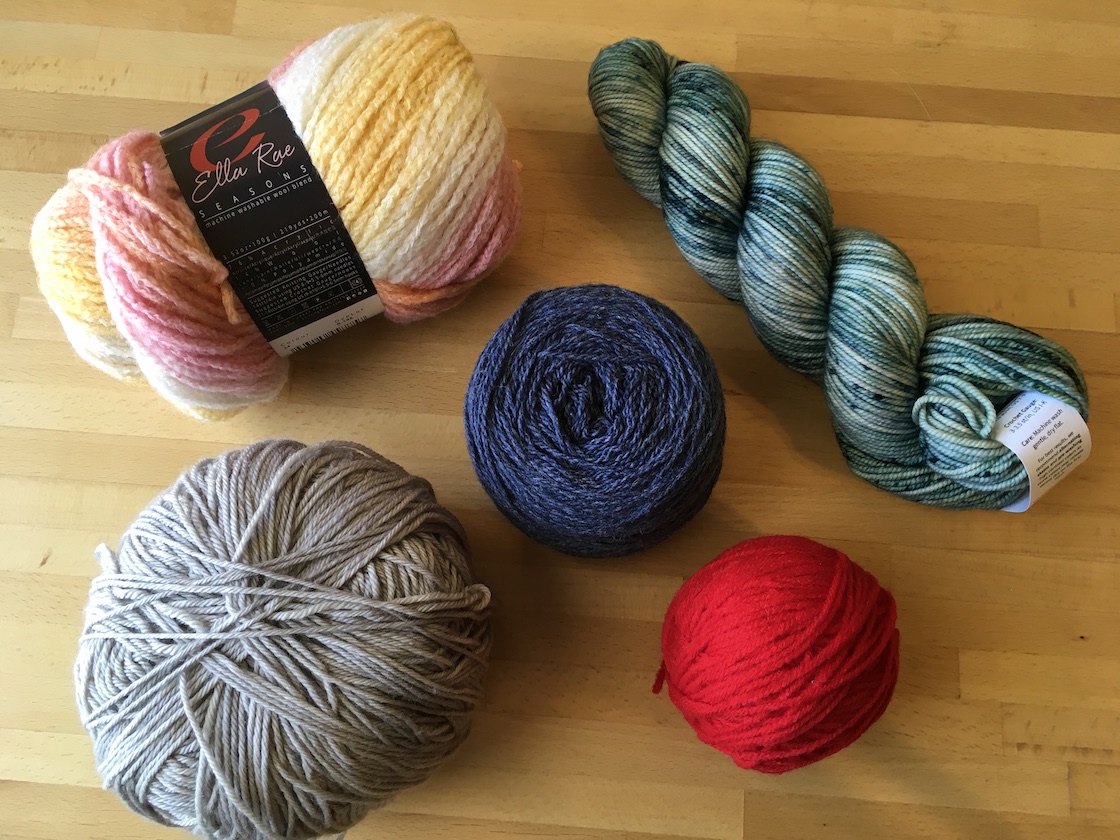
Some yarn comes in a skein and is ready to use. Some comes in a hank and needs to be wound before it’s ready for knitting (otherwise it will tie itself in knots.) You can wind the yarn by hand into a ball; into a cake using a handheld yarn winding stick; or into a (often very tidy) cake using a yarn winding machine, perhaps with the assistance of a swift. Examples are each are shown below, and the video gives a demonstration of how to do each.
The one reason to create cakes instead of balls is that the yarn pulls from the center of the cake and it will stay relatively stable. A ball will roll around in your bag as you use the yarn and can get tangled, especially if you have multiple colors in your project.
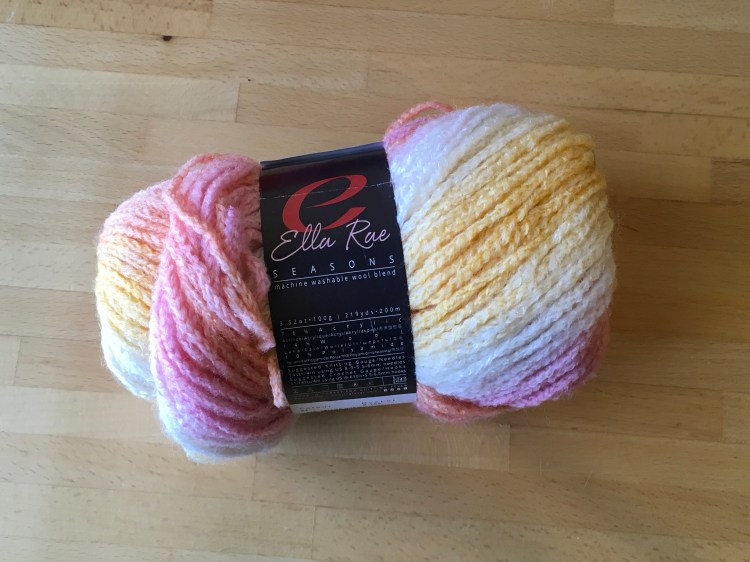


Want to learn to wind hanks of yarn? Check out the video below.
Intermediate Lesson – Mini Weasley Sweater Ornaments

These cute Harry Potter sweater Christmas ornaments are great for stocking stuffers! They’re fun to knit and are adorable on the tree. The raglan sweater construction is the same as how a full-sized sweater of the same type is knit. You’ll need a small amount of two colors of worsted weight yarn. Using the same kind of yarn for both colors will make the lettering look a lot neater. You’ll also need a stitch marker, yarn needle, and an optional large paperclip to make a hanger. The post with the pattern for the Mini Weasley Sweater Ornaments includes a video for how to do the whole project. Before you begin, you may want to review the following instructional videos:
- How to knit with double pointed needles (DPNS) and avoid common problems, OR how to knit magic loop,
- How to knit front back (Kfb),
- How to move stitches to scrap yarn, and
- How to do duplicate stitch.
Feel free to post a question in the comment section or drop me an email. Happy knitting!
Ready for more practice?
If you’re ready to tackle a full-sized Weasley sweater, there’s a great pattern in Knitting Magic: The Official Harry Potter Knitting Pattern Book by Tanis Gray. Or check out the other available Cushion of Joy knitting lessons.
How to do Duplicate Stitch
Duplicate stitch traces the exiting stitches knit in stockinette. Often used as a decorative accent, it can also be used to mask an error. The trick is sliding the needle behind both legs of the stitch above the one you’re tracing, which can feel counter-intuitive; see image below.

A demonstration of how to do duplicate stitch is available in the following video. If you want to knit letters, my go-to resource is from Purl Soho.
Want to Give it a Try?
The following pattern uses duplicate stitch:
Tivoli Slouch Hat Pattern
This Tivoli Slouch Hat is adorable, easy to knit, and comes together quickly. The hat in the photo above was knit with Lion Brand Heartland Yarn in the Grand Canyon color. It’s knit in the round on 16″ size 8 circular needles and finished with size 8 double pointed needles (DPNS). You’ll also need a stitch marker and yarn needle. Here are the techniques you need to know:
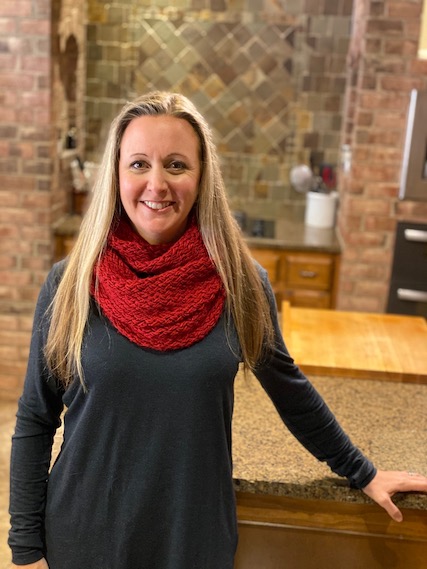
Want to knit the scarf we like to wear with this hat?
How to Knit Front Back (Kfb)

Knit Front Back (Kfb) is a method of increasing the number of stitches in a row. To do it, you simply knit the front of the stitch (in front of the left hand needle, like usual) but before you slip the stitch off the left hand needle, knit the back of the stitch (the same stitch you already knit but now knit the yarn behind the left hand needle), and then slip the original stitch off the left hand needle. You now will have increased your stitch count by one.
In the Mini Weasley Sweater Ornament shown above, you’ll see the diagonal lines going from the neck toward where the sleeve joins the sweater. Each of those was made with two Kfb stitches next to each other (for a total of two increases made on each side.)
The following video shows how to do the Kfb stitch:
Want to Give it a Try?
The following patterns use the Kfb stitch:
How to Knit with DPNS (and avoid common problems)

Knitting with double pointed needles (DPNS) seemed a bit like magic to me when I was first learning to knit. But once I gave it a try, I realized it’s pretty straight forward. One trick is to use knitting needles with a little more grip, such as using bamboo and avoiding metal needles. I’m partial to the U-nitt bamboo needles, which are also available in sets with multiple sizes from Amazon. I then sewed this case to hold them all. I like smaller needle sizes (up to size 7 needles) to be 6″ in length and larger needles (sizes 8 to 15) to be 8″ in length.

Once you learn to trust that the needles really aren’t going to fall out of your stitches, and figure out how to get your fingers around the needles, the next thing to worry about is laddering. Laddering is when the tension between your needles is uneven (often too lose), which creates a gap that looks like a ladder; see the following image. The video below demonstrates a couple different methods to avoid laddering.

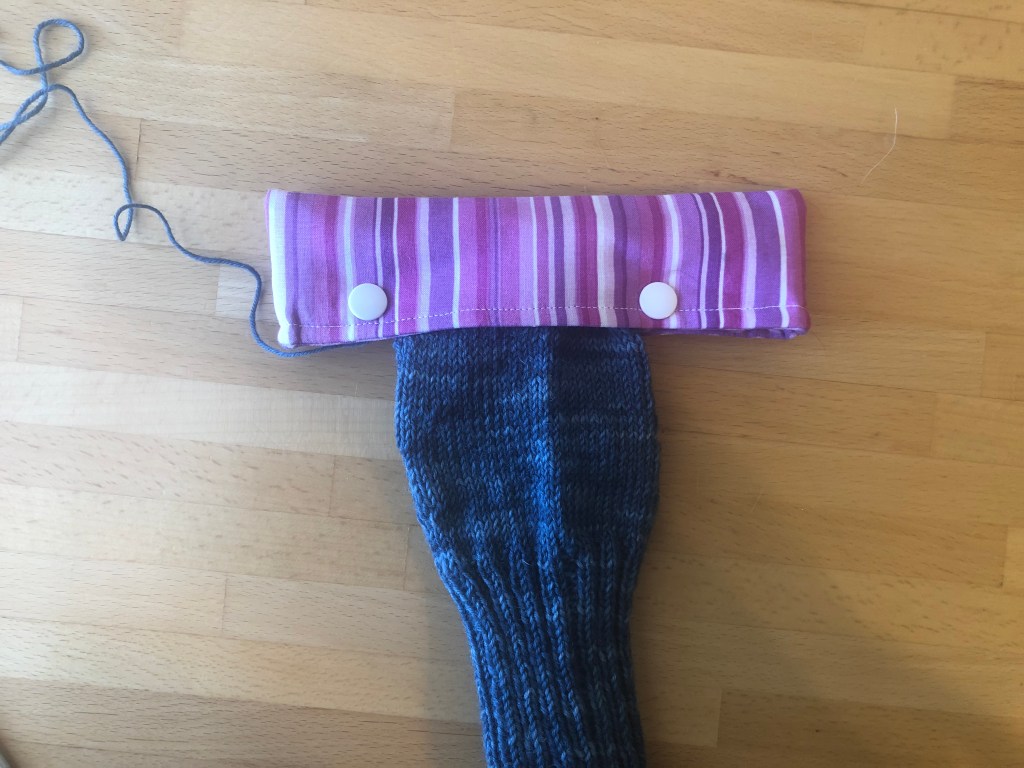
One other tool that’s helpful when knitting a project on DPNS is a case made to hold your project. When you put down your work between knitting sessions, you can gather the needles together and place them in a DPNS case; when snapped closed, the snaps prevent the stitches from moving around and sliding off the ends. You can see an example in the photos below. Another option is to gather up all the needles into a single bunch and put a rubber band around each end of the bundle.

So how do you knit with DPNS? Check out the video below to learn more.
Want to Give it a Try?
The following projects are knit on DPNS:
How to Move Stitches to Scrap Yarn
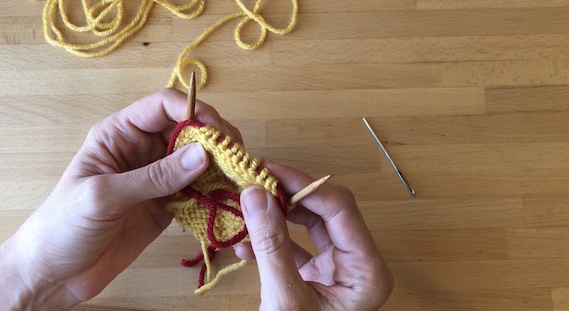
Sometimes a pattern will call for moving stitches to scrap yarn. For example, when knitting a raglan sweater, the sleeve stitches will be held on scrap yarn until the body of the sweater is finished. Learn how to move stitches to scrap yarn in the video below. You’ll need a small amount of yarn in a contrasting color to your project and a yarn/ darning needle.
Want to try knitting a sweater? Start with these cute Mini Weasley Sweater Ornaments.
 Cushion of Joy